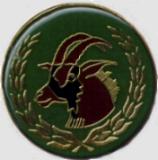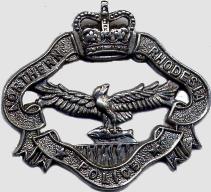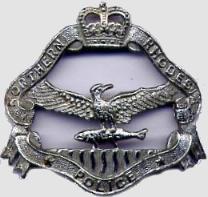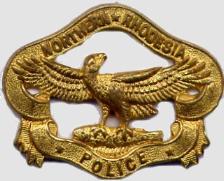
legal advertisement: These descriptions a collector facilitated them to me. I ignore if they come from some author.
Northern Rhodesia Protectorate, 1924-139
In 1924, The British Colonial Office took over
the administration of Northern Rhodesia from the British South Africa Company.
Sir HERBERT STANLEY was appointed the first British governor, with residence in
Livingstone.
The Colonial Office promoted the immigration of white settlers, reserving
stretches of farmland for them. Immigration was not satisfactory; the country's
major industry was copper mining, picking up in the 1920es. The Great Depression
resulted in sharply declining prices for copper (1931-1933), which affected
Northern Rhodesia. Yet, copper production still increased. In 1935 Northern
Rhodesia was the scene of a labour dispute, a strike in the Copper Belt. In the
1930es, a second axis, the GREAT EAST ROAD, had been constructed, connecting
Nyasaland with the Great North Road; where these roads met lay the city of
LUSAKA. In 1935, the colony's capital was moved there, from Livingstone.
The discussion of plans for the settlement in Northern Rhodesia of European Jews
fleeing political repression were intensified in the aftermath of the so-called
'Kristallnacht', a massive anti-Jewish pogrom launched by Nazi organizations on
November 9th 1938. Overall, an estimated 250 Jews found their way to the
landlocked British protectorate.
Northern Rhodesia Protectorate, 1939-1964
When World War II broke out in 1939, Britain
claimed the colony's entire copper production; copper prices soared. A Northern
Rhodesian regiment was recruited, fought in the war in various theatres. In 1940
the second Copper Belt strike took place.
After the war, steps for democratization were undertaken; an AFRICAN
REPRESENTATIVE COUNCIL was established in 1946. The white settlers were against
a policy giving the Africans a greater part in the political process and a wider
access to education and campaigned for an amalgamation with Southern Rhodesia.
In 1948, two Africans were appointed to the Northern Rhodesia Legislative
Council. The first African mineworkers' union was organized (1948). The NORTHERN
RHODESIAN AFRICAN NATIONAL CONGRESS was founded.
In 1950, elementary education was made compulsory for Africans. In 1953, against
the expressed will of many Africans, the CENTRAL AFRICAN FEDERATION, also called
RHODESIA AND NYASALAND, was created.
In the late 1950es, political parties were founded representing the African
population majority; in 1962 a campaign of civil disobedience paved the road to
independence.
The NRANC organized boycotts, strikes; in 1959 it was banned. Many NRANC leaders,
among them KENNETH KAUNDA, joined the UNIP (United National Independence Party),
which in 1960 elected Kaunda president. Also in 1959 elections were held in
Northern Rhodesia, the first with African participation. A new constitution was
promulgated in 1962; a coalition UNIP-NRANC government was formed (1962). In
1963 the federation of Rhodesia and Nyasaland was dissolved; Northern Rhodesia,
under the name of ZAMBIA, was granted independence in 1964.